
For many professionals today, equity compensation is not just a nice perk, but a significant source of wealth accumulation over their careers. Whether through restricted stock units (RSUs), stock options, or other forms of company equity, these awards have become increasingly common across industries and job levels.
However, with this type of compensation comes complexity. Understanding the role that equity compensation plays in a broader financial plan while managing risk is essential for building wealth. These challenges exist whether you work for a small startup or a large public company, so it isn’t just about whether your company will perform well. For those who receive a meaningful portion of their compensation in company stock, getting these decisions right can make a difference in financial outcomes.
Equity compensation has grown in importance
Equity compensation can take several forms, each with distinct characteristics that affect taxes, vesting, liquidity, and financial planning. The three most common types are RSUs, stock options, and restricted stock awards (RSAs).
While not all professionals receive equity, its role in compensation plans in addition to salary and cash bonuses has grown over time. For companies, equity helps preserve cash while incentivizing long-term employee commitment and aligning performance. For employees, equity can be valuable as it provides potential for financial gain tied to company success, creating a path for long-term wealth creation.
In the mid-20th century, equity was primarily reserved for top executives as a tax-advantaged way to align their interests with shareholders. The 1950 Revenue Act introduced the concept of restricted stock options, allowing employees to benefit from favorable capital gains treatment if they met certain holding requirements. This made equity compensation an attractive tool for companies.
The landscape changed again during the dot-com era in the 1990s. Stock options became a recruiting and employee retention tool for startups that had limited cash but fast-growing valuations. At the time, companies were not required to treat stock options as an expense on their income statements, unlike other types of compensation. When the bubble burst in the early 2000s, many of these options were worth very little. This also led to changes in accounting rules to treat stock options just like any other compensation.
This experience prompted a shift in how companies structure equity compensation. Tech giants, for instance, began favoring RSUs because they retain value even when stock prices decline. Unlike options, which only have value if the stock price rises above the strike price, RSUs represent actual shares that vest over time. A recent survey by the National Association of Stock Plan Professionals (NASPP) and Deloitte showed that technology and life science companies grant RSUs to nearly 60% of their workforce.1
Valuing equity compensation in your portfolio
One of the most challenging aspects of incorporating equity compensation within a financial plan is determining how to value it. This valuation matters because it affects how you think about the rest of your portfolio and decisions around asset allocation. This is complicated by the concept of liquidity, or how easily an investor can sell their equity. There are many rules around vesting, trading windows, and secondary markets to consider.
Without a proper financial planning framework, some investors view equity compensation as “worth nothing” when it’s unvested or if there is not a public market for those shares. While this is understandable, the reality is that the equity likely has value that should be reflected in financial plans.
On the other hand, some employees at high-growth private companies might be tempted to value their equity based on the most recent funding round. This can be equally problematic since private company valuations can be uncertain and may not translate into realized market values if and when a liquidity event occurs, such as via an IPO or acquisition.
A more balanced approach is to recognize that equity compensation represents real value, but with important caveats. For public company RSUs, use the current market price but recognize that this value will fluctuate. For options, consider both the intrinsic value and the time value that comes from the possibility of future appreciation. For private company equity, the most recent valuation is instructive but may require a discount due to illiquidity and uncertainty.
Concentration risk and how to manage it
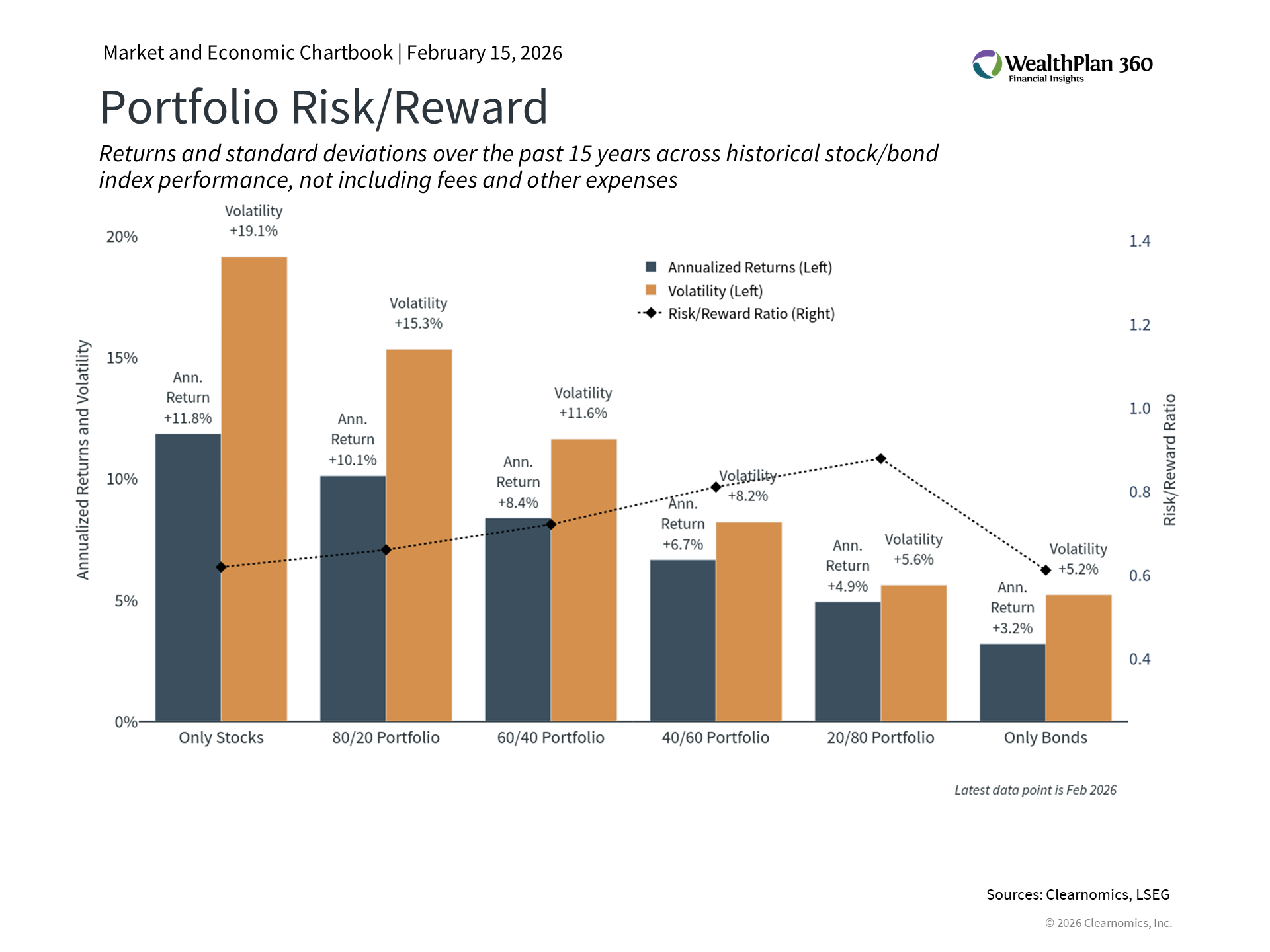 |
An important consideration when looking at the overall asset allocation of a household is known as “concentration risk.” This refers to having too much of your wealth tied to a single investment or, in this case, your company’s stock. The risk is enhanced by the fact that both your income and your investment portfolio are dependent on the same company’s success.
For a holistic financial plan, several strategies are available to help. The key is to plan ahead carefully, balancing the upside of equity compensation while managing the risks associated with concentration, taxes, illiquidity, and uncertain valuations.
Here are several strategies that can be considered:
- Staged selling involves pre-committing to sell a set percentage of vested shares on a regular schedule. By deciding in advance and sticking to a plan, you remove emotion from the decision and gradually reduce concentration over time. Rule 10b5-1 trading plans can be particularly valuable for investors subject to trading restrictions. These plans allow you to set up automatic sales while remaining in compliance with insider trading rules. However, they require careful setup, including respecting cooling-off periods and avoiding overlapping plans.
- Planning ahead for a large tax event requires careful planning. This may include strategies such as optimizing your asset location, holding off on tax-loss harvesting, or identifying charitable strategies that support your tax planning. For instance, donating appreciated shares that you’ve held long-term to a donor-advised fund provides an immediate tax deduction, reduces single-stock exposure, and can potentially help remove capital gains tax.
- Maintaining a liquidity sleeve by setting aside cash and short-term bonds can help offset any liquidity risks, and can support upcoming tax obligations or near-term expenses. This ensures you have enough cash on hand so that you’re never forced to sell shares at an inopportune time.
- Portfolio construction in other accounts should take into consideration your equity compensation. If you have substantial exposure to your employer’s stock, your 401(k) or IRA might need to be diversified away from that sector and company. For example, an employee working at a technology company with significant RSUs might want to underweight or avoid technology stocks in their retirement accounts. Similarly, if your company’s performance is tied to specific economic factors, such as interest rates, your diversified portfolio should include assets that behave differently under those conditions.
For those with very large concentrated positions, there are many other sophisticated strategies including protective puts (though these are often prohibited on your own employer’s stock), exchange funds that pool stock from multiple investors, or structured donation strategies. However, these approaches typically require professional guidance given their complexity.
Equity compensation is one part of your overall financial plan
Successful management of equity compensation requires looking at how it fits into your broader financial picture. The goal is to create a comprehensive financial plan that takes the best of equity compensation while ensuring your overall portfolio is aligned with your long-term financial goals.
The bottom line? Equity compensation can be powerful for building wealth but requires careful management. By understanding the risks and planning ahead, you can integrate it into a comprehensive financial plan focused on long-term success.
References
1. https://www.naspp.com/blog/5-trends-in-full-value-awards